Yellow-eyed penguin (YEP) Investigation
Yellow-eyed penguins (Megadyptes antipodes) (YEP) are the world’s rarest penguin species, and are only found in New Zealand - on the Otago peninsular and the south-east coastline of the South Island, Stewart Island (and some its off-shore islands), and the sub-Antartic islands (Auckland Island group).
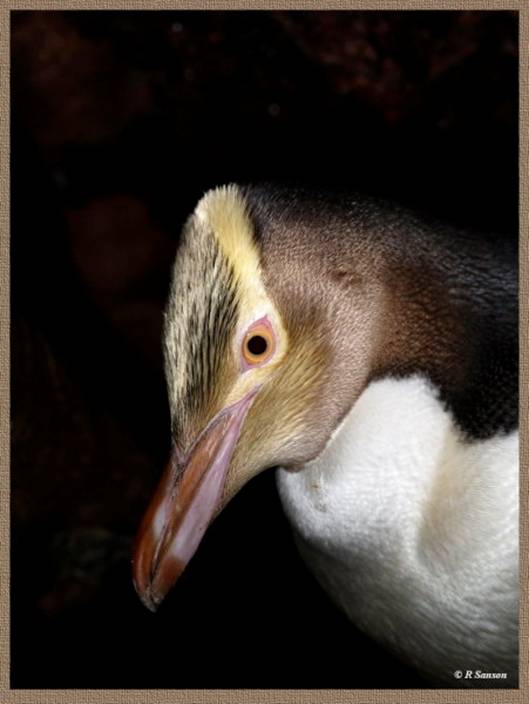
Yellow-eyed
penguin photographed at
During the current and previous four
breeding seasons (November – February), YEP Trust volunteers have been
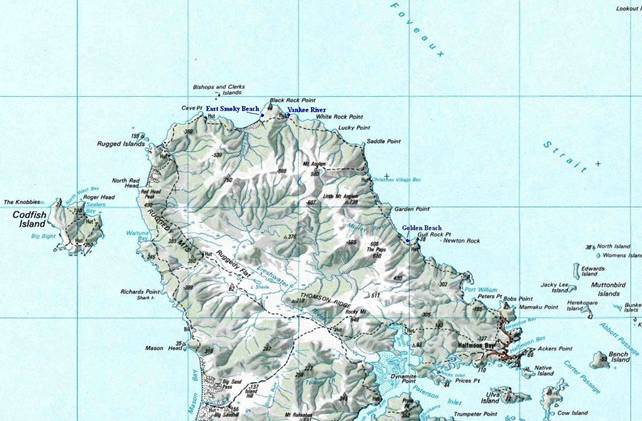
monitoring nesting sites on the northern and north-eastern
A team of four of us - Graham Mackereth, Veterinarian, MAF Biosecurity
New Zealand, Kate McInnes, Veterinarian, Department
of Conservation, Rachel Cane, Entomologist, NZ Biosecure,
and myself - assembled at Oban,
Stewart Island on 21 November 2007, to investigate chick mortalities in the
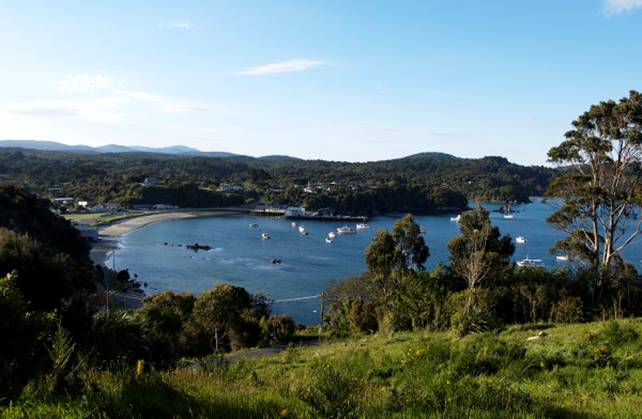
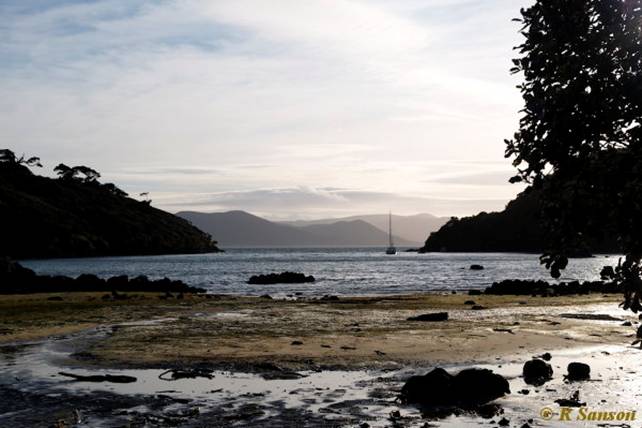
On 22 November 2007, we were ferried by the
DOC ship ‘Jester’ to
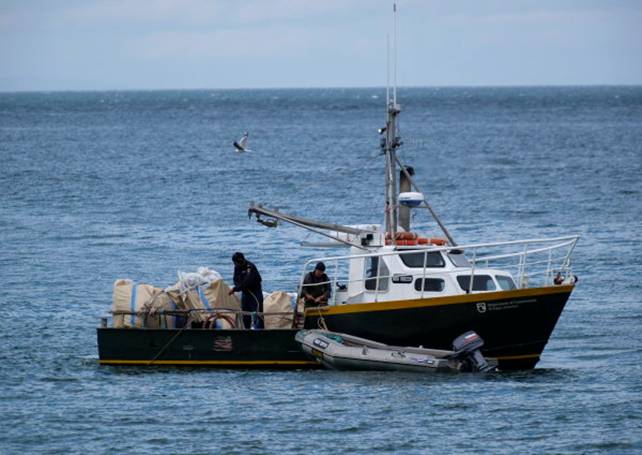
‘Jester’,
the DOC ship
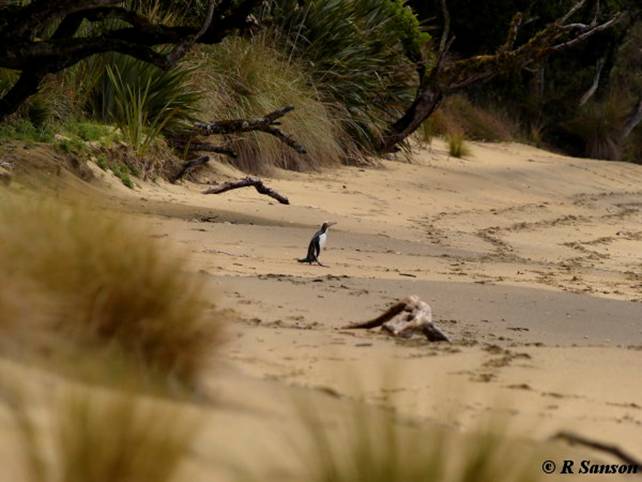
Yellow-eyed
penguin on
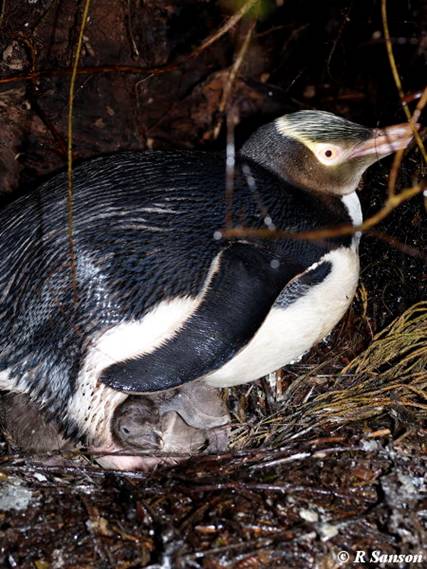
Yellow-eyed
penguin and recently hatched chicks,
YEP nest 2-300 m above the beach in bush or scrub, with the nest a shallow bowl lined with sticks and forest debris. YEP pairs typically lay 2 eggs. Both parents share the job of rearing the chicks. For the first few weeks after hatching, one adult stays with the chicks, the so-called ‘guard phase’, whilst the other feeds, until they are large enough to be left alone. The chicks should put on weight rapidly, and ultimately should get as large as the parents by late January, early February.
On 24 November 2007, we were flown by
helicopter to
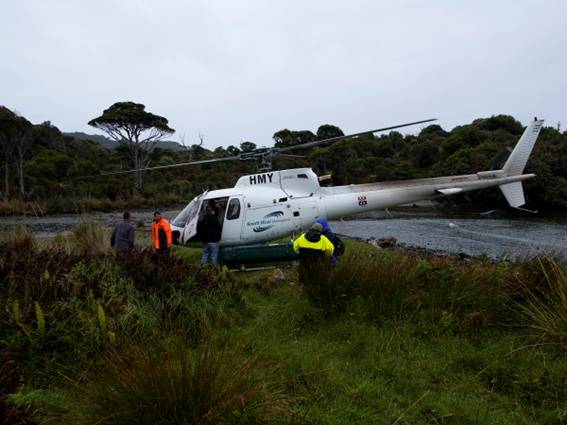
Squirrel
helicopter that transported us to
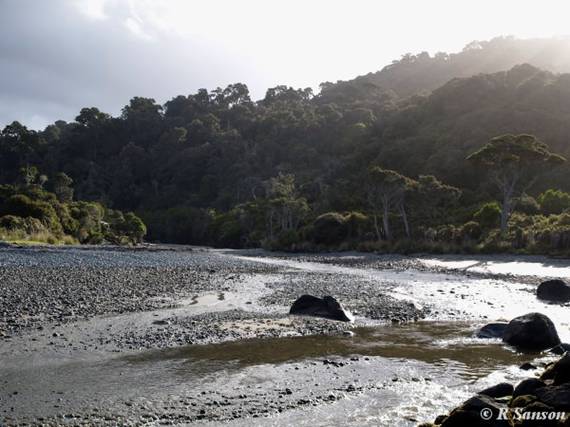
We were met by Sandy King, one of the YEP
Trust volunteers who had brought us a recently dead chick from
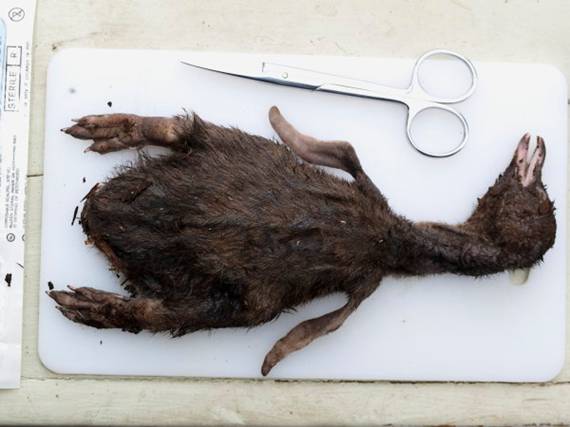
Dead chick
from
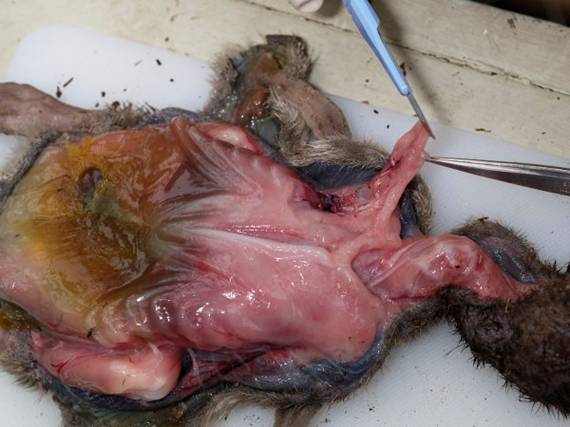
Later that afternoon, Rachel set up some insect traps to try and capture some mosquitoes and some of the numerous sandflies, to test for vector borne disease agents.
The following day, we walked to
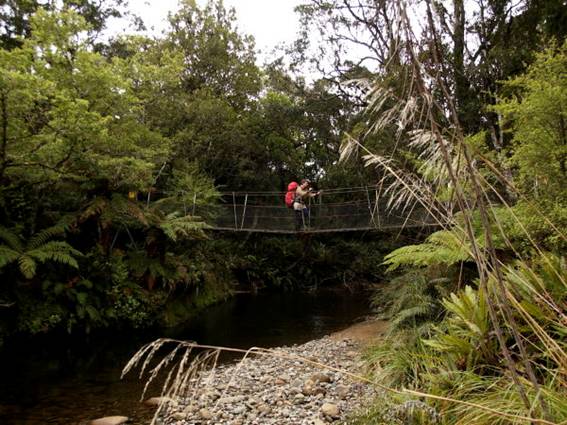
Sandy
King, YEP Trust volunteer, crossing
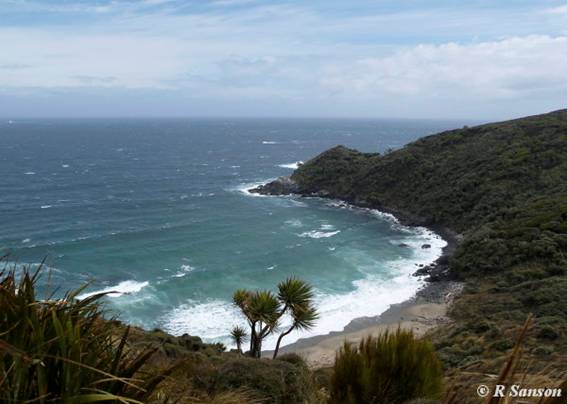
East Smoky
Beach,
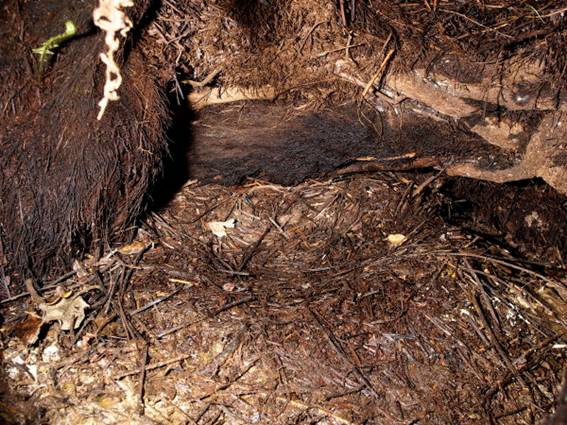
East Smoky
YEP nest
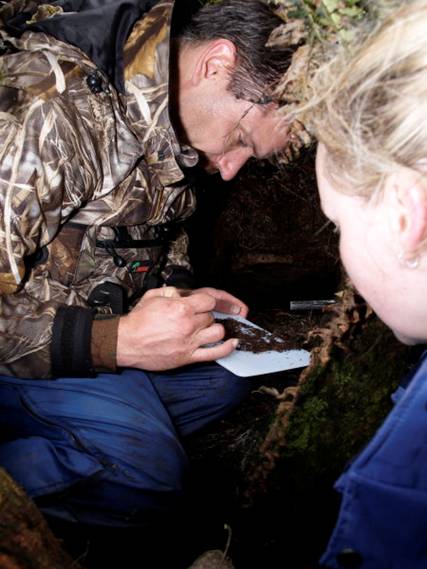
Searching
for ticks and other insects
That evening, we were stranded at
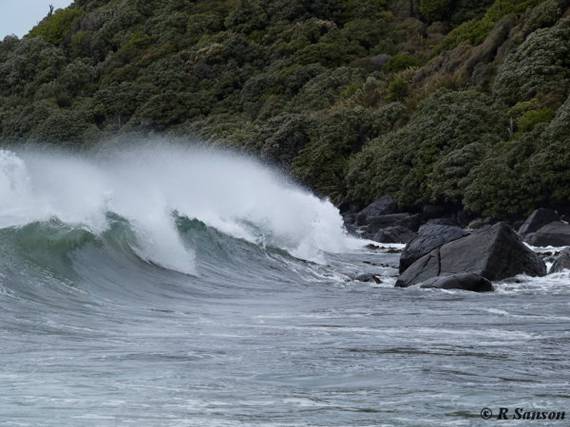
Rough seas
at
Meanwhile, it gave us time for some photo ops and search for Fjiordland crested penguins, which also inhabit this coastline.
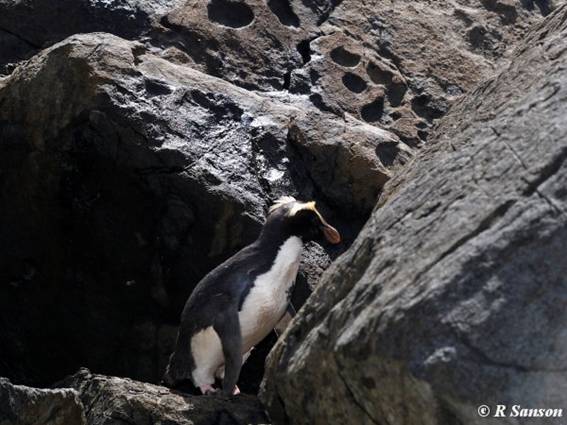
Fjiordland
crested penguin on rocks at
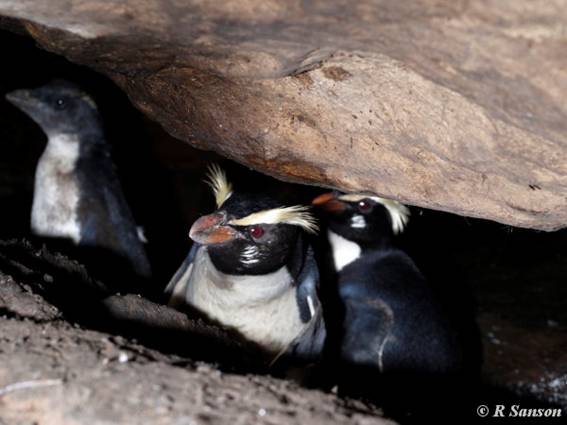
Fjiordland
crested penguin nest. Notice large healthy chick on left.
Sunday afternoon, Kate McInnes turned up with two dead chicks from a nest at Long Harry Beach. These were very similar to the dead chick from East Smoky we had post-mortemed a couple of days previously. As before, a thorough post-mortem was conducted and samples collected for virology, bacteriology, histology, serology and blood smears for haemo-parasites. Noticeably the gizzards were virtually empty.
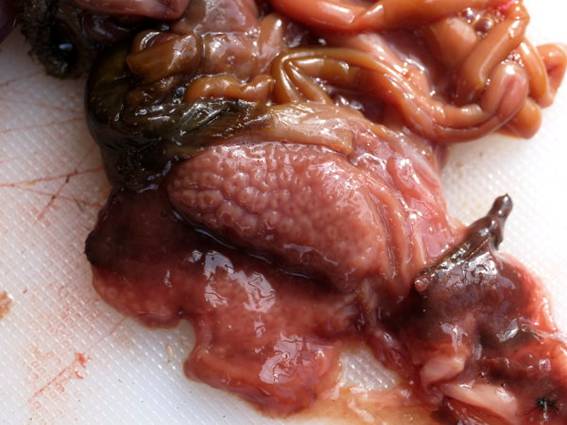
Empty
gizzard in Chick 1 from Long Harry
Eventually we were picked up by water taxi
from
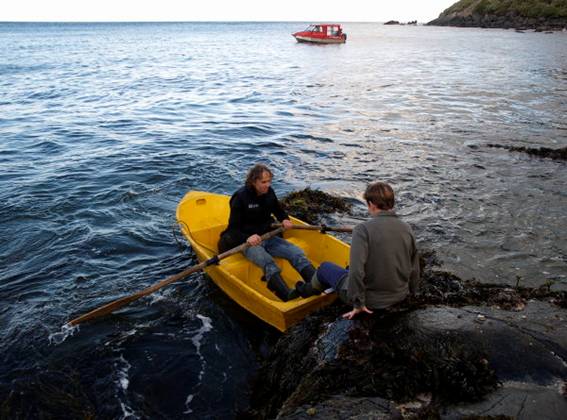
Kate McInnes getting into a dinghy at
While staying at Oban,
we were visited by friendly kaka, and I had an opportunity to visit
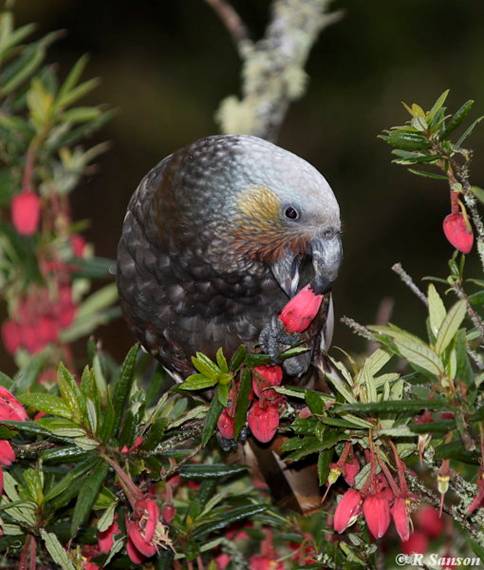
Kaka at Oban,
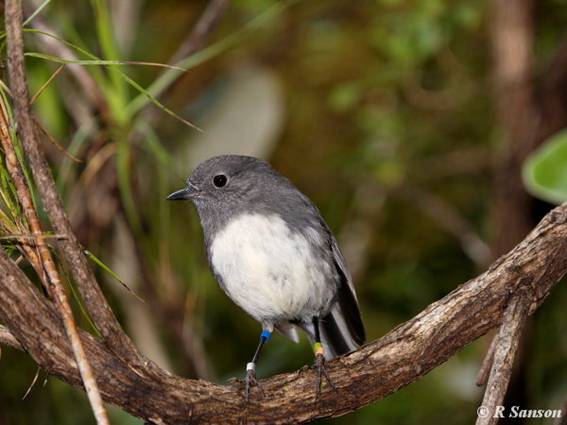
Stewart
Island Robin on
On Monday 26th November, Graham Mackereth and I left
Acknowledgements
I gratefully acknowledge Biosecurity New
Robert Sanson
5 December 2007